
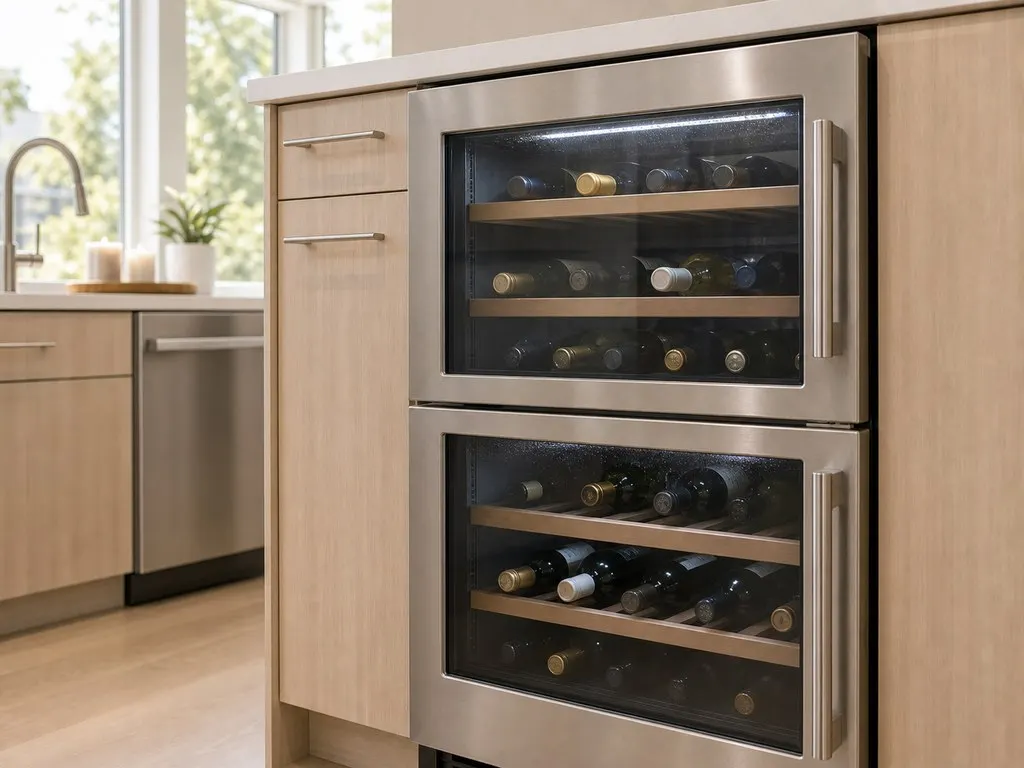
A wine fridge is the one appliance in the house that quietly punishes you for being a degree or two off. You will not taste the difference at dinner — you taste it years later, when a cellar-worthy bottle from a Sunnyvale collector's stash opens flat. Sub-Zero builds genuine built-in wine storage — dual-zone columns and undercounter units engineered to hold a steady temperature and humidity, which is exactly why they end up in the entertaining kitchens around Cherry Chase, Birdland and the newer downtown stacks near Murphy Avenue.
When one of these units starts drifting, the owner's first fear is the compressor. It rarely is. Here is the order things actually go wrong, and why a Sunnyvale wine column usually has a small, bounded fix waiting for it.
Dual-zone control, and where the drift starts
A Sub-Zero wine unit is built around dual-zone control: an upper zone for reds and a lower zone for whites and sparkling, each with its own thermistor and its own damper feeding cold air from a single sealed system. That split is the unit's best feature and its most common failure point. When one zone holds true and the other creeps two or three degrees off, the problem is almost always the sensor reading or the damper feeding that zone — not the refrigeration itself.
A thermistor that has drifted reports the wrong temperature to the control board, so the unit either over-cools or never calls for cooling when it should. A sticking damper starves one zone while the other stays perfect. Both are bounded repairs with genuine OEM parts, and both get diagnosed by comparing the displayed temperature against an actual reading in the bottle space before anything is replaced.
Heat, dust and the Santa Clara County summer
Sunnyvale's long warm stretches matter more for a wine unit than for a kitchen fridge, because wine storage is asked to hold a tighter band against a bigger outside swing. A built-in wine column rejects its heat through a condenser behind the lower grille, and in a kitchen that runs warm in August that condenser has to work harder. Load it with household dust and pet hair and the sealed system runs hotter and longer, which is the single most common reason a healthy unit suddenly cannot hold its setpoint on a hot afternoon.
The door is the other half of the climate story. These units use a UV-tinted glass door with a perimeter gasket that has to seal against warm room air all day. A gasket that has compressed after years of use lets in heat and humidity — you will see condensation on the inside of the glass and a zone that drifts up in the afternoon and recovers overnight. A condenser clean and a gasket check once a year heads off most of these calls before a bottle is ever at risk.
Vibration, the quiet fault, and when to repair
There is one failure unique to wine storage: vibration. A failing evaporator or condenser fan, or a compressor mount that has aged, sends a faint buzz through the cabinet. It will not spoil the appliance overnight, but constant micro-vibration disturbs the sediment in older bottles and accelerates aging in the very wines a collector is trying to hold. If your unit has developed a new hum, that is worth a look on its own merits, not just when the temperature moves.
On the repair-versus-replace question: a Sub-Zero wine unit is built to be serviced, and a sensor, damper, fan, gasket or control-board repair almost always costs far less than replacing an integrated column and refitting the cabinetry around it. We give you an honest read on remaining life before you spend. If your wine column is drifting warm, sweating on the glass or buzzing, call (669) 338-4601 or book online — the $89 service call is waived when you book the repair, and the work carries our 365-day labor warranty.