
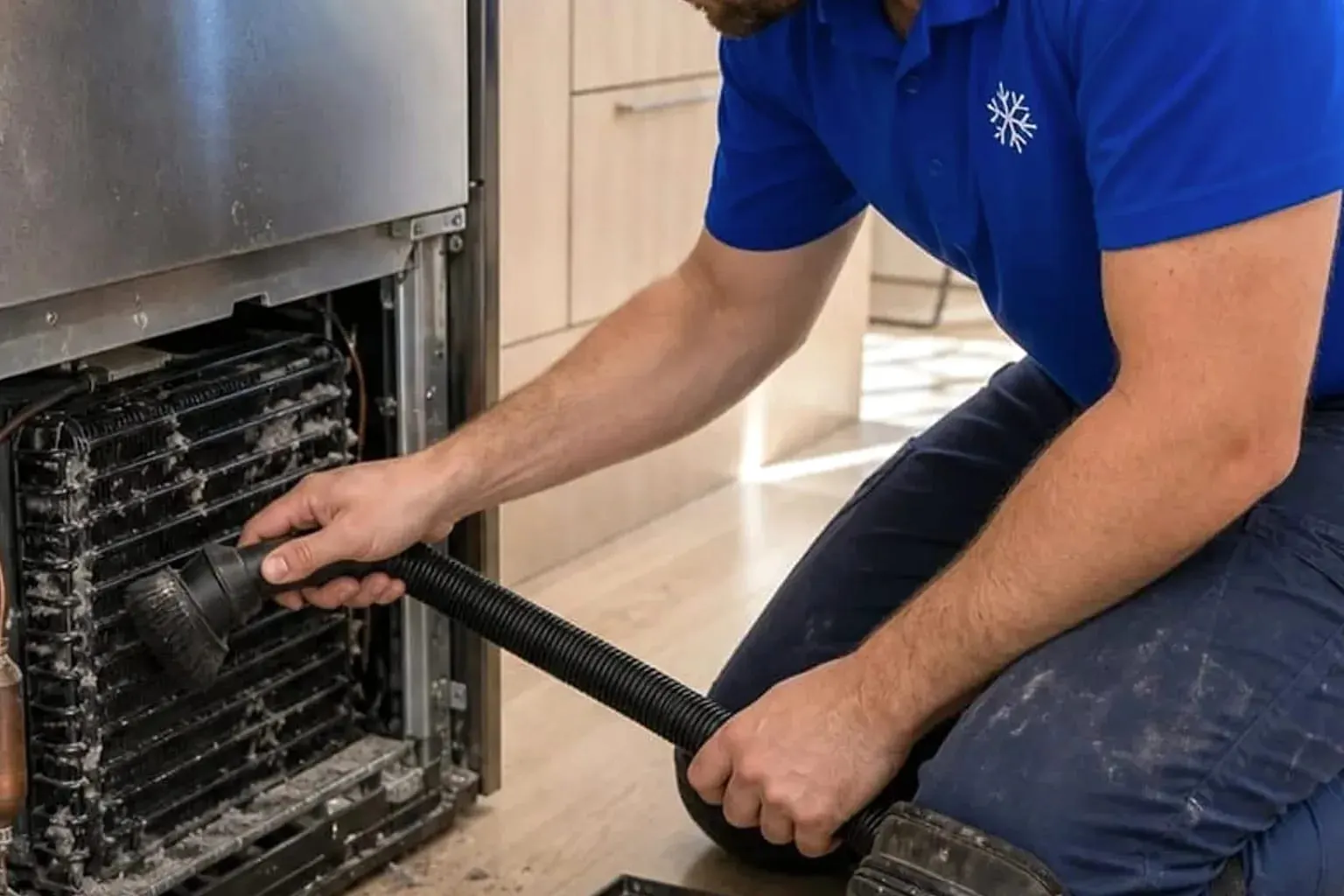
The final ticket on this one was $365 - a drain heater kit plus the patient labor of a full thaw - for a Sub-Zero 611 in Birdland that kept leaving water under the crisper drawers every few days. The cause was an iced-over defrost drain with a dead drain heater, so each defrost cycle melted frost that had no working path out and quietly wet the cabinet floor instead.
I write up jobs like this as a running log because the order of the checks is the whole lesson. After 25 years leading service calls around Sunnyvale, I can tell you the sequence below is close to a script for this failure, and the script rarely takes more than a morning.
The Call, As It Came In
The message from dispatch read like dozens I have logged before: water under the crisper drawers every few days, no visible leak from the ice maker, please advise. The unit was a Sub-Zero 611 that went into a Birdland kitchen during a 2005 remodel, twenty-one years old and still on its original refrigeration. The owner had been mopping the same puddle for three weeks and had already ruled the ice maker out by shutting off its supply - the water kept coming anyway. That one detail did half my diagnosis before I ever parked the truck. Dispatch had also flagged hardwood flooring in front of the unit, so the visit moved up the morning schedule; water calls jump the queue. On a 611, water that returns on a lazy few-day rhythm with the ice maker isolated is a defrost problem until proven otherwise, because only the defrost cycle makes water on a schedule.
Hour One: Finding the Ice Sheet
I started where the water ends up. Crisper drawers out, kick panel checked, evaporator cover off - and there it was: a sheet of ice about a quarter inch thick spread beneath the evaporator cover, with fresh meltwater tracking off its edge toward the cabinet floor. Below it, the drain cup, the small reservoir that should catch every drop of defrost water, sat bone dry. That pairing is the tell. A dry drain cup underneath a wet cabinet means defrost water is being made and then routed anywhere but the drain. The drain trough backed that up: a faint mineral stain marked the high-water line where warm defrost water had pooled, crested, and slipped over the edge again and again. I logged both observations and moved from where the water goes to where it was supposed to go.
Hour Two: The Meter Settles It
Next I probed the defrost drain itself. It was plugged solid with ice right at the grommet, the rubber fitting where the drain exits the liner - not sediment, not a kinked line, a hard plug of ice. A drain only freezes like that when nothing is warming it, so the last check was electrical: continuity across the drain heater. The meter read open - OL, no resistance at all. A healthy drain heater shows a measurable resistance value; an open one is a dead wire wearing a heater's jacket. That heater is a small element hugging the drain opening; its whole job is holding that one spot above freezing while a defrost runs. Three readings, one story: the heater quit, the drain froze, and every defrost cycle after that pushed meltwater over the dam and onto the floor.
The Thaw, the Kit, and the Test Cycle
The fix is unglamorous. Most of the visit went to a careful thaw - warming the ice sheet and the drain slowly so nothing cracks, then flushing the line until it swallowed water as fast as I poured it. The drain heater kit rides on my truck because this failure is steady work on 611, 632 and 650 built-ins, so there was no ordering and no return trip. New heater in, cover back on, then a forced defrost to watch the whole path perform: frost melts, water tracks to the grommet, the drain carries it away, the cup catches the last of it. While the cover was off I brushed the visible coil surfaces and checked the gasket corners - free prevention on an already-open unit. One visit, same day, and the owner got to retire the towels.
Reading the $365 Invoice
The ticket closed at $365 for parts and labor, and the $89 service call was waived once the repair was approved. Jobs in this family cost less than the mess suggests: the part itself is modest, and what you are really paying for is a patient thaw and a properly cleared drain rather than exotic hardware. As a rough industry estimate, an iced defrost drain with a failed heater on a built-in Sub-Zero runs $275 to $500 complete, which puts this job near the middle of that spread. For a two-decade-old built-in, that is maintenance money, not crisis money. The number I care more about is the one from the follow-up call: zero drops of water since.
If Your 611 Is Making Its Own Puddles
A recurring puddle under the crisper drawers deserves a call before it deserves another mop. The rhythm is the clue worth reporting: water every few days points at the defrost cycle, water tied to ice or dispenser use points at the supply side, and a light sweat during a heat wave can be ordinary condensation working overtime. Two cautions from this log. Do not chip at the ice sheet - evaporator fins and the liner are softer than any tool you will use. And do not keep deferring, because standing water eventually finds the cabinet base and the flooring, and that bill belongs to a contractor, not an appliance tech. If your pattern matches this log, say so when you book - the right part then rides out on the first truck.